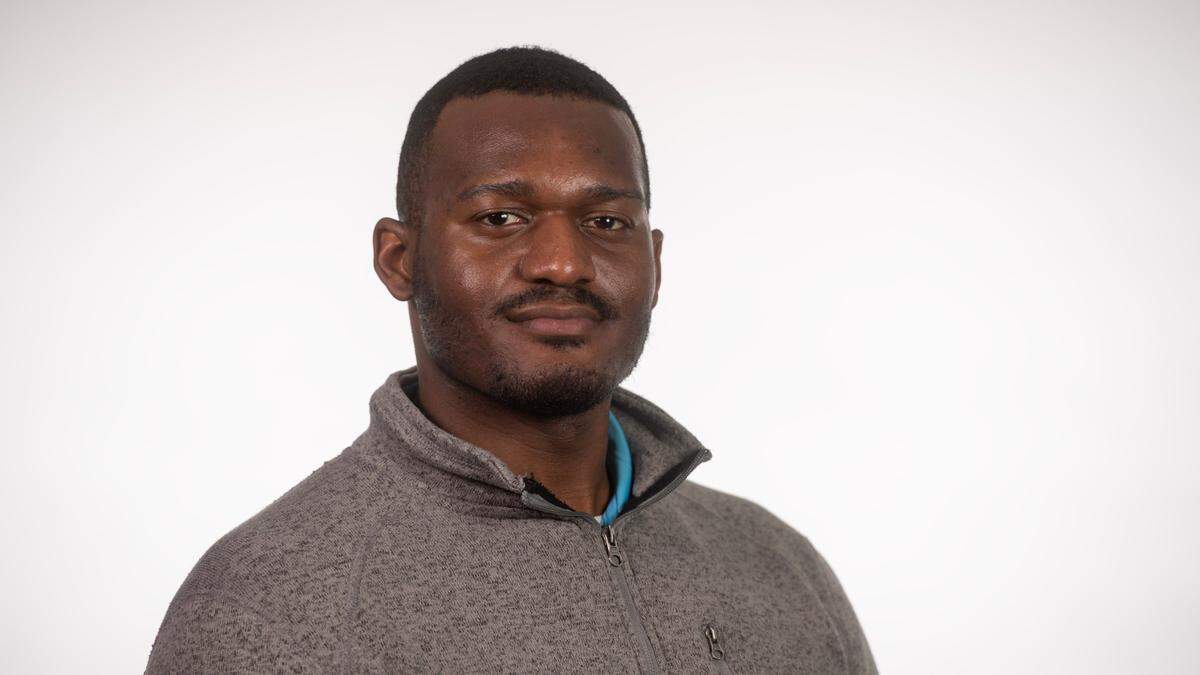
Closing arguments coming in capital murder trial for NKC officer
All evidence has been presented to a 12-person jury from St. Charles County, Missouri, in the capital murder trial for Joshua Rocha, a now-convicted murderer in the shooting death of North Kansas City police officer Daniel Vasquez.
Rocha was found guilty of first-degree murder on Thursday in a Clay County courtroom, advancing the trial to the sentencing stage.
Rocha, 28, is facing life in prison without parole or probation, or the death penalty. With all the evidence shown to the jury, closing arguments are expected on Tuesday.
Rocha’s defense ended its attempt to sway the jury away from a death sentence on Monday with 13 witnesses. Two mental health experts, family members, and other people in Rocha’s life explained how his traumatic background impacted his life.
Clay County prosecutors presented more than 30 witnesses, which included investigators, Vasquez’s family and friends, and Rocha’s detention officers.
Their testimonies supplied evidence, such as dash cam footage of the shooting, videos of Rocha shooting and 3-D printing guns, police interviews with Rocha and his mother, and incidents where Rocha was found with contraband in prison while being detained.
Some detectives spoke about how investigating a police shooting affected them personally. Vasquez’s loved ones and co-workers described their experiences with Vasquez and how they’ve attempted to cope since his death.
Dash cam footage played in the courtroom showed Rocha shooting Vasquez three times with an AR-15, including two misfires, during a traffic stop on July 19, 2022, after being pulled over for expired tags. Rocha left Vasquez’s body lying in the middle of the road at Clay Street and East 21st Avenue, according to the footage.
After emotional testimony from Rocha’s loved ones on Saturday, additional testimony from a neuropsychologist explained Rocha’s mental makeup while Rocha’s brother chronicled the conversation he had with him shortly after the shooting.
Rocha’s family members make last testimonies
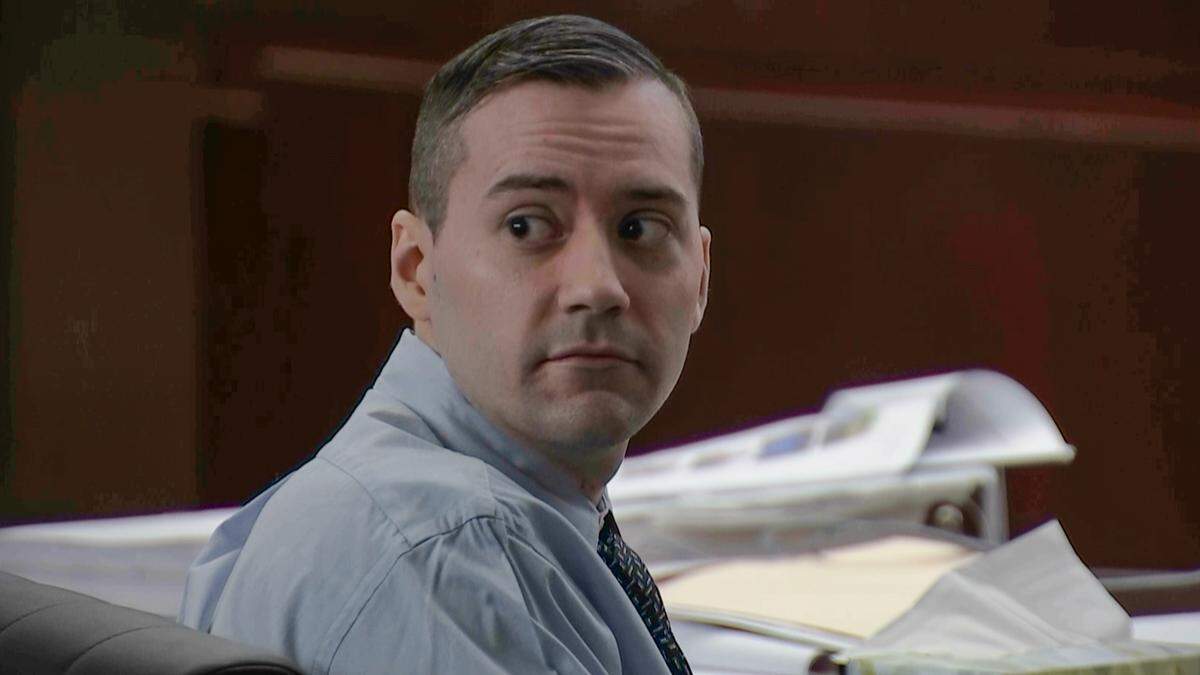
Rocha’s family testimony on Saturday was from the maternal side. His paternal family, including his brother, were the last witnesses to testify on his behalf.
Rocha’s father, Kenneth Waterbury Jr., was incarcerated for 22 years on federal drug charges, most of Rocha’s life, Waterbury said. When Waterbury was out of prison during Rocha’s childhood, he would take Rocha and his brothers to different activities like skating.
Waterbury said when Rocha was a toddler, he was in the car for one of his drug deals.
Rocha’s father also illustrated that the men in his family are good with their hands. One of Rocha’s brothers is a fleet mechanic for law enforcement vehicles in Kansas City, Waterbury said on the stand.
Rocha, too, had experience with vehicles, having helped build an electric car while attending the alternative high school DeLaSalle Education Center in the Minddrive program, a non-profit organization aimed at automotive design for high school students.
Minddrive co-founder Steve Rees said Rocha was a quiet, but “really pleasant” teenager, on the witness stand. Pictures shown in the courtroom displayed teenage Rocha working on cars as the group took their vehicle on a California tour, presenting their car to colleges and companies like Google and Tesla.
Assistant prosecuting attorney Savina Balano asked Rees about Rocha being kicked out of his school before DeLaSalle for selling drugs and about Rocha leaving the program after a year. Rees said he didn’t recall hearing about either.
As Rocha’s loved ones gave the final testimonies, they recalled where they were when they learned of the shooting.
Waterbury was still in prison and heard about the news through national radio since his facility was on lockdown. He earned money as a tattoo artist in prison and hoped to open a tattoo shop with Rocha once he was released.
“I know my Josh didn’t do no s--- like that,” Waterbury said were his first thoughts.
Rocha’s brother, Army Sgt. David Bell,, said he was working on a truck in Fort Bragg when his mother called him. Rocha and his mother were upset and crying, Bell said, then two minutes of silence went by before they told him Rocha was going to turn himself in at the Clay County Annex.
Bell didn’t mince words.
“You’re a f------ idiot, “ Bell told his brother over the phone.
Bell’s message to his brother were some of the first words from Rocha’s family testimony that attempted to hold Rocha accountable for his actions.
“You already know what you gotta do,” Bell told his brother. “From here on, you have to live with that mistake you made. You have to live with what you did. You’re responsible for that.”
Neuropsychologist explains Rocha’s autism diagnosis
On Saturday, clinical psychologist Sara Boyd explained how Rocha has language deficiencies and has low cognitive functioning, testing just above intellectual disability. He was also diagnosed with autism later in life, after being a daily marijuana smoker by as young as 10 years old, she said, and dropped out of high school after ninth grade.
On Monday, University of Virginia neuropsychologist Scott Bender said Rocha had “considerable cognitive problems”, which explains how Rocha has Level 1 autism spectrum disorder, a mild form of autism.
Bender described autism spectrum disorder as “an impairment in social communications,” and cannot anticipate people’s thoughts and emotions. Rocha’s symptoms: difficulty speaking and with coordination; and a fixation on things where other parts of life are neglected; appeared early in his life and remain present, Bender said.
A house fire that killed two of Rocha’s brothers and his great-grandmother led to Bender stating Rocha meets the criteria for post-traumatic stress disorder. Rocha suffered first-degree burns and smoke inhalation in the fire, which could also have factored into his intellectual ability.
“Some degree of problems stem from that [low level of oxygen to the body],” Bender said.
Rocha’s brother, David Bell, also disclosed on the witness stand that he was inappropriately kissed by an older girl in a home they lived in as children. He later learned the girl molested Rocha, Bell said.
Rocha’s intellectual ability, autism diagnosis and post-traumatic stress combine for a larger impairment, according to the mental health expert.
Bender also said Rochal played the role of someone who appears to be in street life but does so to fit in because of his autism diagnosis.
In a cross-examination, assistant prosecuting attorney Spencer Curtis pressed Bender about the appearance of a persona since Rocha printed, traded, bought and sold firearms, and filmed himself shooting firearms. Curtis also mentioned a shooting where Rocha told his mother he shot at a slow-moving car as it drove past a home where his cousins where congregating.
“So it walks like a duck, talks like a duck, but it’s not a duck?” Curtis asked.
“Depends on the duck,” Bender answered. “He walks and talks like he has autism.”
This story was originally published October 6, 2025 at 6:32 PM.