Why doesn’t Kansas City control its own police? The story starts with the Civil War
READ MORE
Politics of the KCPD
The Kansas City Police Department is controlled by a five-member board of police commissioners, four of whom are appointed by Missouri’s governor. The arrangement is highly unusual for a big city and periodically becomes of a point of public debate.
Expand All
For decades, Kansas City has not had control of its police department, as most other cities do.
The Kansas City Police Department operates under state control by a five-member board of police commissioners, four of whom are appointed by Missouri’s governor. The city’s mayor always has a seat on the board.
The arrangement is highly unusual, if not unique, among other major cities in the United States and periodically becomes a point of public debate. Kansas City taxpayers provide millions in police funding but have little say in how those dollars are spent.
After major protests against police brutality and racism in the summer of 2020, demands for local control grew louder. Mayor Quinton Lucas and some community leaders say the state control system is outdated and rooted in racist politics.
Frequently, the discussion of why Kansas City is governed this way goes no further than the story of political boss Tom Pendergast, who dominated local politics and government in the 1930s. After the Pendergast machine was brought down because of corruption, the story goes, the state took control of the police.
But that is not the whole story.
State control of Kansas City police actually began decades before Pendergast and has its roots in the Civil War politics of white supremacy, slavery and racism, historians say.
It was during the Civil War that a Missouri governor sympathetic to the Confederacy sought to keep pro-Union St. Louis from controlling weaponry that could possibly benefit the Union. Later, during Reconstruction in the 1870s, the state took the same action in Kansas City.
Lucas said that history provides no good reason for preventing Kansas Citians from exercising the same control over police that other cities have, now including St. Louis.
“It is a very troubling history and there is no rational basis or legitimately rational relationship between either that history and today, or between the corruption of the 1930s in Kansas City in having a continued requirement that the people of Kansas City’s voices be muted and marginalized in policing conversations,” Lucas recently told The Star.
Some of that history figured into the arguments of a court filing in support of the city against a lawsuit filed by the Kansas City Board of Police Commissioners. The police board has challenged a city ordinance that gives the city some control over a portion of the police budget.
Gwen Grant, president and CEO of the Urban League of Greater Kansas City, filed legal action seeking to join the lawsuit in support of the city.
The current police board model dates back to efforts by pro-slavery forces during the Civil War to mute the power of cities with higher representations of African Americans and higher numbers of citizens who are sympathetic to civil rights causes, as compared to rural communities in the state, Grant said.
“The diminution of the authority of cities, particularly minority communities, remains in the state control model of policing, but the few rationales provided in the 1940s no longer do,” she said in a written statement.
“Tom Pendergast died in 1945. Mob rule of elections in Kansas City has not been a threat for 80 years, but the state perpetuates a system with no relationship to legitimate state interests, as evidenced by the fact no other community in Missouri maintains the model.”
Civil War origins
In her legal pleadings, Grant said that the origin of the state’s control of the police department can be found in 1861, the year the Civil War began.
The previous year, Claiborne Fox Jackson was elected Missouri governor. Jackson ran as a “Douglas Democrat,” aligning himself with presidential candidate Stephen A. Douglas’ platform of opposing secession but permitting slavery.
Shortly after being elected, Jackson lobbied for Missouri to join the Confederacy.
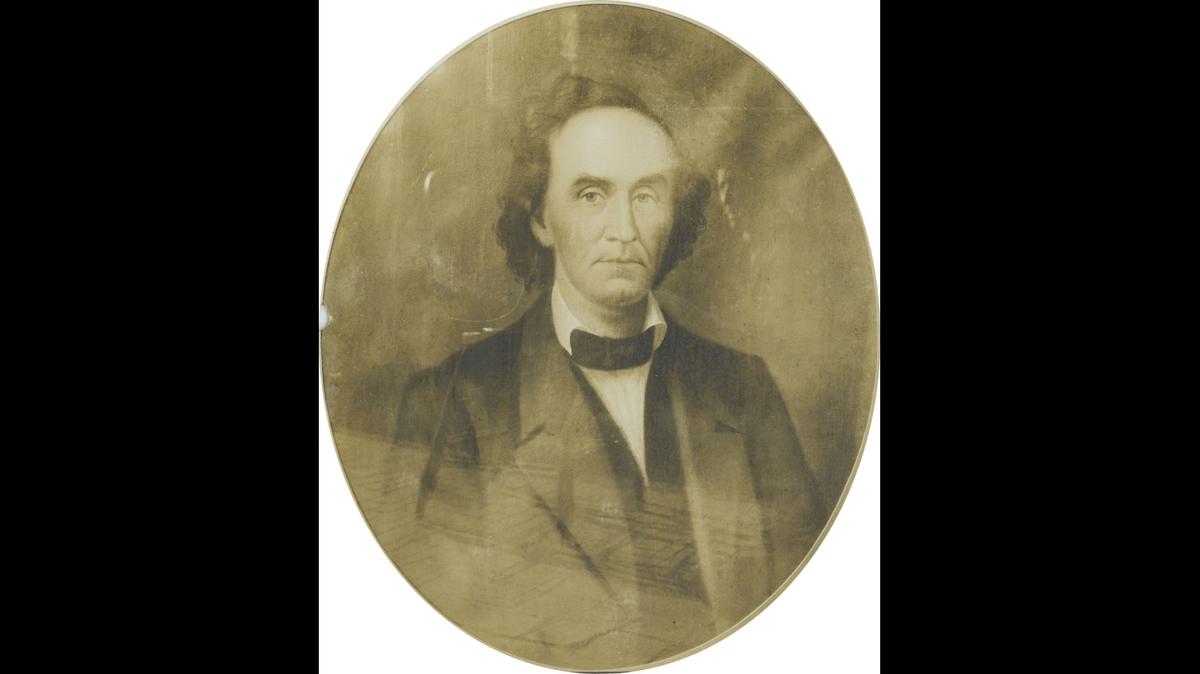
In his inaugural address, he said Missouri and other slave states shared a common interest and that if other slave states seceded from the Union, Missouri should join them, said Braden Perry, an attorney representing Grant.
Grant and attorneys who filed the motion to intervene based their arguments in historical documents and previously published material, including news articles and public radio reports.
Jackson summoned a special state convention on the question of secession, and despite his efforts, in February 1861, the delegates voted 98-1 in favor of remaining part of the Union.
Jackson, who was pro-slavery and a secessionist, didn’t want St. Louis, which largely supported the Union, to control its own ammunition arsenal, said Antonio Holland, a professor emeritus of history at Lincoln University in Jefferson City.
In March 1861, Jackson encouraged the state legislature to pass the “Metropolitan Police Bill” that gave the state control of St. Louis’ police department.
It would be controlled by a board of commissioners appointed by the governor.
The proposal was hotly debated in the Missouri General Assembly, where one state representative called the bill “an effort to disenfranchise and oppress the people of St. Louis because they were not sound on the Negro question,” according to the legal filing.
Back then, St. Louis had a higher representation of Black residents and others sympathetic to Black “freedom and civil rights, than did Missouri.”
Missouri Rep. George Moore of St. Louis said the police bill was “a monstrous act of tyranny and despotism.”
Randolph Doehn, another representative from St. Louis, said it “was nothing else but an odious and pernicious crusade against the rights and the welfare of the city of St. Louis.”
The Metropolitan Police Bill eventually prevailed and served as the model for the 1874 legislation under which the state took control of Kansas City’s police force as well, Perry told The Star.
Taxation without representation
In the 1870s, as today, Kansas City was home to more African-Americans, and an electorate more sympathetic to African-American civil rights, than most of Missouri, Grant’s court filing said.
In 1874, the state seized control of the city’s newly created police department.
Until 1932, the Kansas City “Board of Police” system was modified on several occasions, but the governor appointed the majority of the board. The board requested its funding from Kansas City, and the city had no choice but to provide that funding.
Kansas City experienced local control of police only during a relatively short window of time in the 1930s.
A court challenge in 1932 placed the Kansas City police board under local control.
However, seven years later, at the urging of Gov. Lloyd Crow Stark, Missouri lawmakers took action that re-asserted control over the police board.
The move had more to do with politics than it had to do with widespread corruption fostered by the Pendergast machine, as Stark had alleged, said Holland, the historian.
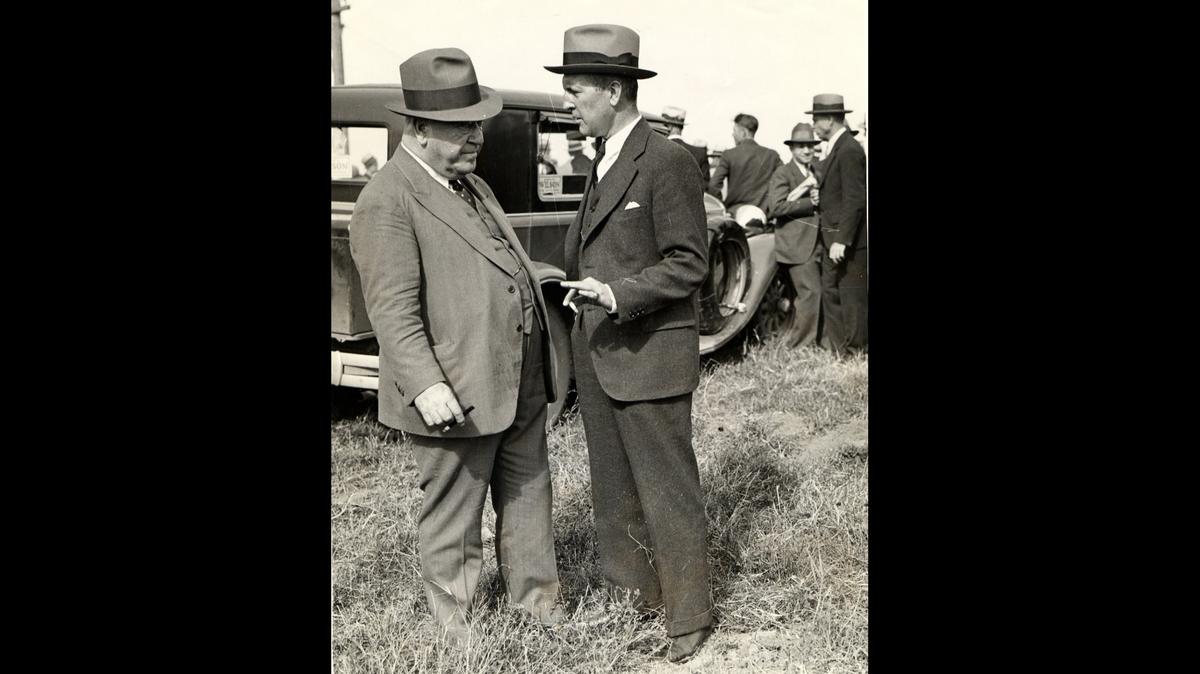
Stark was a segregationist and a political rival of Pendergast’s who had his own political machine that was made up of state workers.
When Stark took over control of the Kansas City police board, a number of top police commanders and officers were fired. Stark also shut down the after-hours nightclubs that were sprinkled throughout the historic 18th and Vine jazz district, Holland said.
Control of the Kansas City police force has remained in state hands since then. Despite opposition from Kansas City elected leaders, including Lucas, state lawmakers recently passed a resolution that allows Kansas City police officers to live outside the city limits.
The measure was proposed and advanced by the Kansas City police union.
“The state runs roughshod over the larger urban areas,” Holland said. “It proved that the police union has more influence than the mayor and the city council.”
In her court filing, Grant said she took the action on behalf of the city’s taxpayers because “the ‘Taxation Without Representation’ scheme maintained in the police board’s lawsuit and the current policing structure violates” the Missouri Hancock Amendment, which is a citizens’ initiative that limits state revenue and local taxes.
In her petition, Grant noted that St. Louis regained control of its police department in 2013, “but for Kansas City the same system from the segregationist era persists.”
Grant’s petition remains pending, according to court records.
Police Chief Rick Smith has maintained the police department is better served to remain under state control.
Smith wrote in a 2019 blog post on the department’s governance model: “Many say that model is outdated. We believe, however, that it has served the people of Kansas City well for 80 years and will continue to do so.”
This story was originally published July 14, 2021 at 2:40 PM.