What Really Happens When Your Family Starts Eating Fermented Foods Every Week
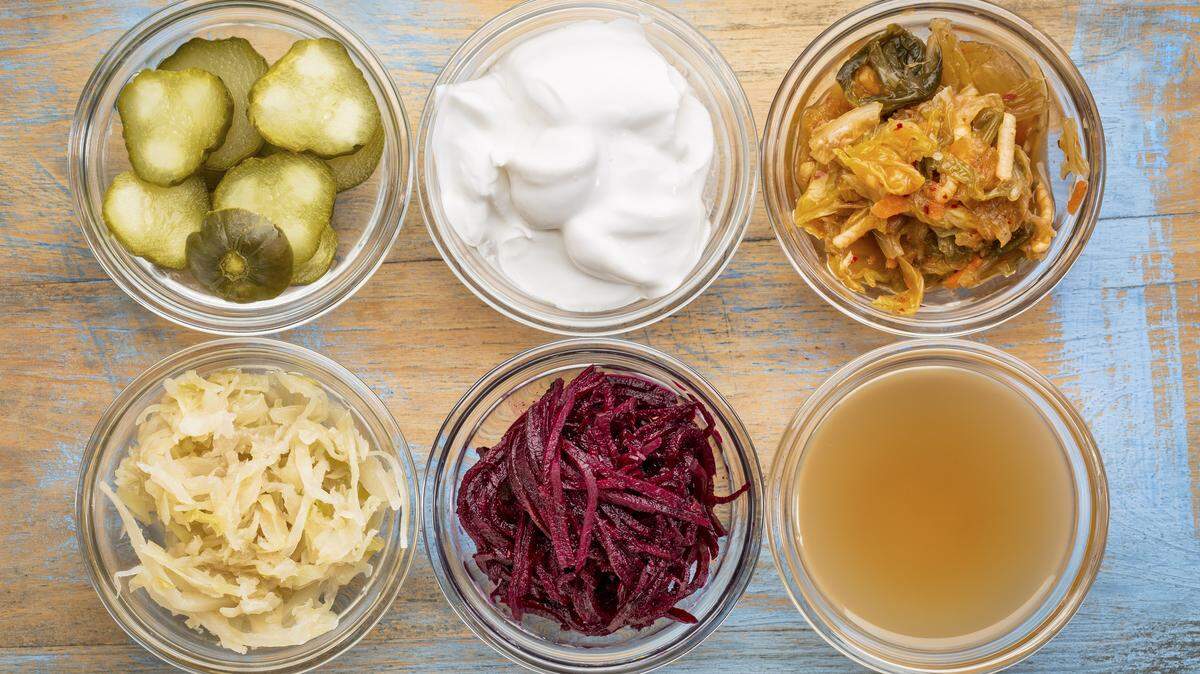
You don’t need a specialty grocery run or a Pinterest-worthy meal plan to improve your family’s gut health. The fermented foods with the strongest research behind them are affordable, familiar and probably sitting one aisle over from where you already shop. Yogurt, sauerkraut and pickles can do more than you’d expect when they show up on the table consistently.
What Researchers Found When People Actually Did This
A Stanford clinical trial published in Cell put 36 healthy adults on either a high-fermented-food or high-fiber diet for 10 weeks. The fermented food group saw their gut microbial diversity increase and 19 inflammatory proteins decrease, including interleukin-6, which is linked to type 2 diabetes and rheumatoid arthritis. The high-fiber group didn’t see the same anti-inflammatory benefits.
Lead researcher Justin Sonnenburg, PhD, called it “one of the first examples of how a simple change in diet can reproducibly remodel the microbiota across a cohort of healthy adults.” A simple change. That’s the part worth remembering when you’re already managing school lunches and grocery budgets.
A 2025 meta-analysis in Frontiers in Nutrition backed this up with data from 19 randomized controlled trials covering over 4,300 participants. Fermented food consumption improved bowel regularity, stool consistency and transit time while reducing bloating.
Why This Pays Off at the Dinner Table
Here’s where it gets practical. Fermentation breaks down compounds called phytates and lectins that normally prevent your body from absorbing minerals in foods like beans and grains. That means your family gets more nutritional value from meals you’re already cooking without changing the recipes themselves.
Digestion improves across the household too. More regular bowel movements, less bloating and better stool consistency over time. Since roughly 70% of the immune system lives in the gut, a more diverse microbiome also means your kids and your own body handle common infections more effectively. For parents stretching every grocery dollar toward actual nutrition, that’s a real return on a jar of yogurt.
The Grocery Store Label Check That Matters
Not everything marketed as fermented contains live beneficial cultures. Sourdough bread, beer, wine and most shelf-stable pickles have been heated or filtered, which destroys the organisms you’re after.
What actually delivers the benefits: yogurt with live active cultures, kefir, sauerkraut, kimchi, kombucha, miso, tempeh and pickles fermented in salt brine rather than vinegar. The simplest rule is to shop the refrigerated section and look for “live and active cultures” or “naturally fermented” on the label. If the jar is sitting unrefrigerated on a center aisle shelf, the live cultures are almost certainly gone.
A tub of yogurt, a jar of refrigerated sauerkraut or a container of miso paste are all budget-friendly entry points at any major grocery chain.
One Serving This Week Is Enough to Start
Stanford’s guidance is straightforward: start with one serving per day, then build gradually. The trial participants experienced some initial bloating during the ramp-up that resolved as their guts adjusted.
The first two weeks: Add one serving of something your family already recognizes. Yogurt at breakfast. A spoonful of sauerkraut next to dinner. Serve it alongside a meal rather than on its own to minimize any digestive adjustment.
Weeks three and four: Introduce a second serving and rotate between types. Yogurt or kefir one day, kimchi or sauerkraut the next. Variety is what drives microbial diversity, so mixing it up matters more than eating large amounts of any single food.
After a month: Work toward the range in the Stanford study, roughly 3 to 6 servings daily. A cup of yogurt with breakfast, a kombucha at lunch and kimchi alongside dinner gets you there without reinventing a single meal.
The Bloating Talk (Especially With Kids)
Temporary gas and bloating are the most common early reaction, and they’re actually a sign that your gut microbiome is adjusting to the new organisms. It typically resolves within a couple of weeks. Starting small is the simplest fix, and it’s worth setting expectations with your family, so nobody abandons the experiment after day two.
For family members with IBS or dairy sensitivity, miso and tempeh are gentler starting points than yogurt or kefir. Anyone who’s immunocompromised should check with a doctor before adding unpasteurized fermented foods. Stanford Medicine created a free resource called “Fermenting the Facts” in 2025 that’s worth bookmarking if you want help separating real benefits from grocery store marketing.
You don’t need to overhaul your family’s meals. You just need to add one jar of the right stuff this week and keep it on the table.
This article was created by content specialists using various tools, including AI