Temperatures are dropping, but KCK still has no plan for long-needed homeless shelter
Myia Bass-Evans sat alone at a cafeteria table, laying her head across her forearms, as she waited for the lunch line to form.
At 37 years old, she says she has been homeless for the better part of 15 years. She woke up in Kansas City, Kansas, on Friday morning after her ride back across the state line ditched her the night before, she said.
Living outside means every second is a struggle, she said, and the clearout of her camp a few weeks ago in Kansas City, Missouri, forced her to start over again. The clothes on her back and the bag she carried amounted to all her possessions.
“Ain’t no fun being out here. Streets isn’t for nobody,” she said.
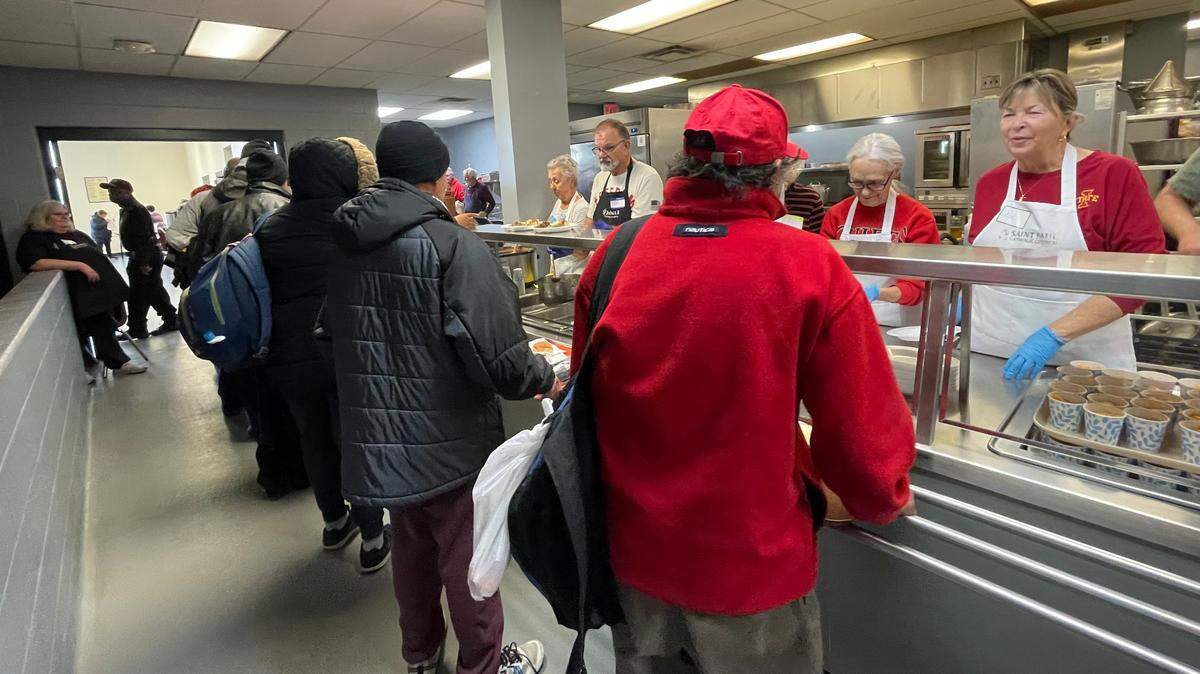
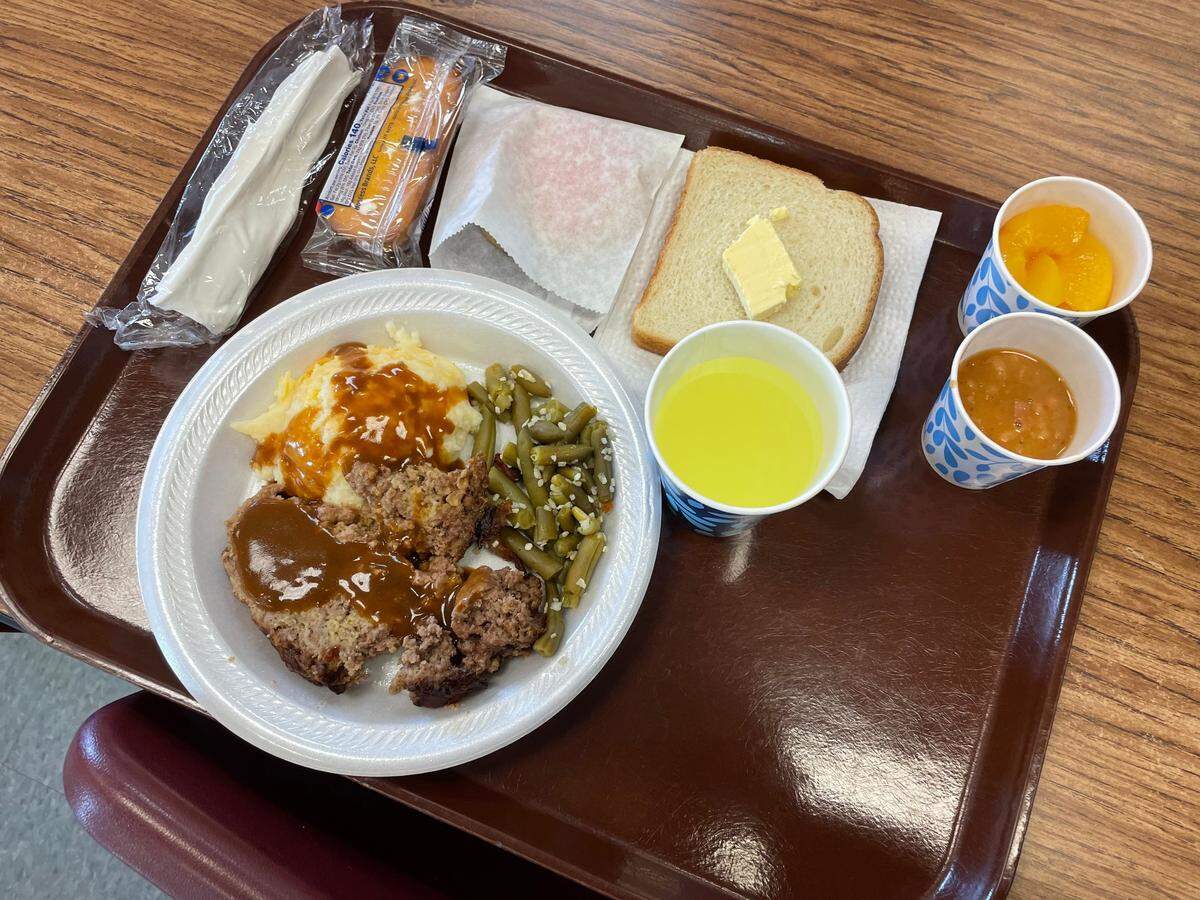
On Friday, Bass-Evans was among the dozens of Kansas Citians offered a plate of meatloaf, mashed potatoes and green beans at the Wilhelmina “Willa” Gill Center, which provides hot meals to those without a place to stay, a growing population in KCK, and other people in need.
Wyandotte County has federal funds for a long-needed homeless shelter and put forth a plan for how $3.2 million could be spent. But it has yet to act on the plan. And as the cold weather sets in, KCK has yet to approve plans for a temporary, emergency cold-weather shelter.
Further complicating the situation is a plan to take a wrecking ball to the Willa Gill Center to make way for a downtown Kansas City, Kansas Community College campus. Local leaders say the center will eventually reopen in a bigger space at a new location. But that site has not been finalized, nor has a commitment to including an overnight shelter at the expanded center.
“We have no plans for an actual shelter,” said Mayor Tyrone Garner. “I know one of the plans in the conversation is a warming center and a cooling center that can be integrated as well as providing some wraparound services.”
A delayed response
The Willa Gill Center serves a population that advocates, social service providers and officials say is growing in the county while no permanent low-barrier shelter — which accepts people without requiring participation in things like religious programs or substance use treatment — exists in the Kansas City metro. Both Johnson County and Kansas City, Missouri, have repeatedly altered and delayed their own plans for such a shelter as well.
The center, housed in a publicly owned building at 645 Nebraska Ave., is run by Mt. Carmel Redevelopment Corporation, Inc., a 30-year-old nonprofit dedicated to the revitalization of Northeast Kansas City, Kansas. Along with meals, the organization provides mailboxes, telephones and an on-site social worker.
Such services help address some of the issues, but executive director Pamela Smart said KCK, is “in desperate need for a shelter.”
Dustin Hare, co-founder of Wyco Mutual Aid, said a shelter is long overdue.
“The need has certainly gone up and up and up, year over year over year,” he said, noting that the longer someone is unsheltered, the harder it can become to stop a spiral of issues from becoming chronic.
Kansas City as a whole has the highest percentage of people experiencing chronic homelessness living unsheltered of any major U.S. city, according to a recent report by the federal Department of Housing and Urban Development. Of 280 people experiencing chronic homelessness in the area, which includes Wyandotte and Jackson counties, nearly 96% were living outside, the study found.
“I don’t think our community is really making any progress towards addressing homelessness,” said Rob Santel, director of programs at Cross-Lines Community Outreach, saying affordable housing shortages in Wyandotte County over the past five years have contributed to many people becoming homeless.
According to a Unified Government report, there are 8,975 renter households with incomes under 30% of the area median income, and 4,430 units considered affordable at that income level.
“The efforts that are currently being taken to address homelessness are all being directed towards managing the problem and the visibility of homelessness, and not actually a person-centered approach and trying to actually end the problem as a community,” Santel said.
Smart, the Willa Gill Center’s executive director, pointed to efforts of other Kansas cities, like Wichita and Lawrence, that have made more significant strides toward solving homelessness — and hopes Wyandotte County can catch up.
A person’s pathway from living on the street to securing stable housing typically starts with staying in a shelter, she said, then moving to a transitional housing option, and eventually moving into a rental. If someone is at the beginning of that process, they need somewhere to start out at, she said.
Possibly freezing to death
Assessing exactly how many people are homeless in a city is notoriously difficult, but the data available suggests at least several hundred people are living outside in Wyandotte County.
According to an allocation plan submitted to the federal housing department for funding, the Kansas City, Kansas, Police Department had 489 unduplicated contacts with homeless people in 2021.
Master Sgt. Angela Joyce, of the department’s Community Policing Unit, said there has been a “huge increase” in the number of homeless people in the area. And there are not enough services to meet the needs of people who end up on the street for a myriad of reasons.
Joyce has seen a couple evicted during COVID-19, living on a bench, become connected with services the same day she met with them. On the other end of the spectrum, it took police more than 2 and a half years to get help for a man without housing who had mental health issues.
Shelter space is scarce across the Kansas City metro, Joyce said. She said officers need the option to guide people living outdoors toward safety, which is nearly impossible since as of last week Wyandotte County still lacked a warm center for homeless people to stay at night.
In recent years, nonprofits have needed to lobby the local government in order to open emergency shelters each winter. A spokeswoman for the Unified Government told The Star leaders continued to work toward finding a location for the warming shelter over the weekend.
“When you’ve got those very cold nights, that gives an officer an option of a place to take someone out of the cold and (prevent) possibly freezing to death,” Joyce said.
“That is something that’s been a pretty valuable asset for us to have,” she added.
A Band-Aid approach?
The Unified Government has made some incremental progress with the help of pandemic relief funds provided by the federal government, but not on a new shelter.
Earlier this month, Hillcrest Transitional Housing cut the ribbon on its renovated KCK campus funded in part with those dollars. In an open house welcoming Unified Government officials, the organization’s leaders walked through spaces that will temporarily house teenagers as well as families in need.
The temporary spaces, where residents receive on-site social services, aim to solve one part of a wider housing affordability problem in Wyandotte County. But providers acknowledge the space is no panacea.
Tom Lally, the president of Hillcrest, said a shelter should have been done five years ago. Now, he hopes one could open in 2026, especially because there’s a sense of urgency with the World Cup coming to Kansas City.
Speaking to The Star at the Hillcrest event, Garner said safe, affordable housing is the challenge, but real conversations about the causes need to be had.
“Homelessness is a symptom of a greater problem,” the mayor said, adding that the focus should be on solutions to help people facing mental health problems, addiction and those with a criminal history.
What about the new Willa Gill Center?
Lally is confident that the Willa Gill Center’s future expansion will include a shelter, but no official plans have been announced.
Before that could happen, the organization will need a new building. Then it will focus on getting services coordinated so the new site is a “truly only-stop centralized location,” he said.
“A lot of decisions need to be made in the next 12 to 18 months,” he said.
They don’t yet have the money to make all the changes they want on the new Willa Gill Center. Funding, Lally said, is “always gonna be the challenge.” He expects some sort of public-private partnership will be the best path forward.
Smart, the organization’s executive director, said she still has questions about what the move from the longtime social services building will look like.
“We need a comprehensive plan,” she said.
Commissioner Evelyn Hill, 4th District, is a co-chair of Mayor Garner’s task force to address homelessness. In October, the working group provided a proposal to the mayor’s office recommending sites for the new Willa Gill Center, along with broad visions to potentially include a permanent, low-barrier shelter.
Hill said the community for years took a Band-Aid approach to the issues to solve homelessness. But she is excited about the future and the potential work of her task force.
“As far as really getting down to where we’re making a difference, we’re not quite there yet,” Hill said.
“We have not turned our back on it,” she added. “We are not looking away. We are actively moving forward to really address the real issues with homelessness.”
Garner said he hopes a new Willa Gill Center could reopen in a new location in early spring or summer 2026.
The plan will be presented to the public, though it’s unclear when.
Nowhere to go
Last Friday, people filed into the Willa Gill Center’s dining room, which can hold 260. A worker asked those entering the lunch line to report how far away approximately they stay from the shelter, as relocation conversations move forward.
The Willa Gill Center not only feeds people, but provides utility assistance and case management. They can help people get IDs, and the center serves as a home address so hundreds of people can receive documents and other mail.
At the height of need during the pandemic, volunteers handed out over 1,100 sack lunches on a single day.
As the doors to the center opened at 9 a.m. Friday, among the first to arrive inside was Heather, who declined to provide her last name for privacy reasons. She said there are no places to go at night in Kansas City, Kansas, and that there are more shelter options on the other side of the state line.
“They need homeless shelters over here,” said Heather, who hasn’t had stable housing for six years, after the home she lived in with her aunt caught fire.
As temperatures the night before dropped to 33 degrees, Dwayne Joe, 62, made his bed on the sidewalk.
“It felt like shit laying on that damn concrete. It’s cold,” he told The Star.
Joe said he has been homeless for about two months after a breakup with his girlfriend left him without anywhere to stay. He’s been sleeping at bus stops and outside a grocery store.
With the seasons changing, Joe said some homeless people will intentionally commit low-level crimes to go to jail, where they can get three meals a day and stay warm.
“It’s better than being on the streets,” he said.